
Maureen Peal’s Brief Alliance and Rejection
The Bluest EyeThis thread follows how Maureen Peal’s apparent solidarity with the MacTeer sisters and Pecola gives way to a cruel assertion of social and racial superiority.
increasing Bearing strength in each event
 decreasing
Bearing strength in each eventdecreasingThe New Girl Arrives
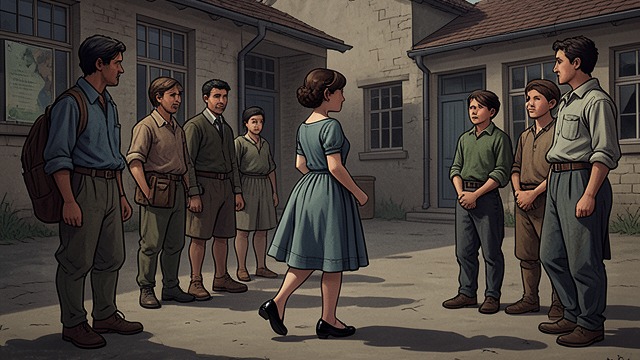
A Polished Arrival
A visible difference
Maureen Peal enters school with clothing and comforts that mark her as unusually privileged among the girls. Her polished appearance draws admiration from teachers and students, while Claudia and Frieda notice their own worn clothes more sharply beside hers.
The sisters privately mock Maureen’s looks to recover some balance, but their hostility has an undertow of fascination. They suspect they might be willing to be her friends if she would accept them.
Unequal welcome
The attention Maureen receives makes the school’s judgments visible: she is welcomed where Pecola is often ignored or ridiculed. Her arrival therefore unsettles the sisters’ sense that childhood friendship can be separated from status and appearance.
Pecola’s Defense
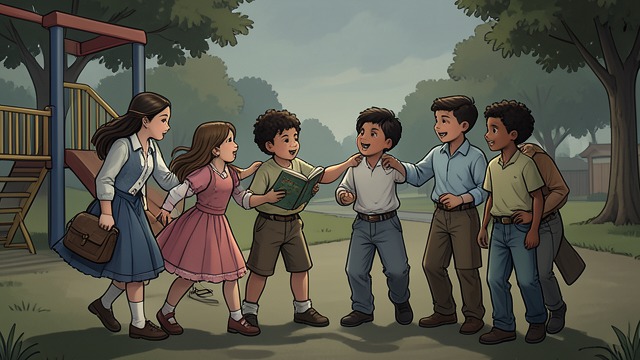
A Moment of Solidarity
The playground circle
After school, Claudia and Frieda find Pecola surrounded by boys chanting insults about her skin and family. The taunts draw their force from the boys’ contempt for their own Blackness as well as from Pecola’s vulnerability.
Frieda breaks the circle by striking one of the boys with her books. Claudia joins the confrontation, and Maureen’s presence helps make the boys retreat rather than turn on the girls.
Friendship offered
Maureen places her arm through Pecola’s and introduces herself as though the two might become close. Her warmth seems to confirm that the rescue has opened a path toward inclusion, and the sisters are pleased by what looks like an unexpectedly generous gesture.
Ice Cream and Confidence
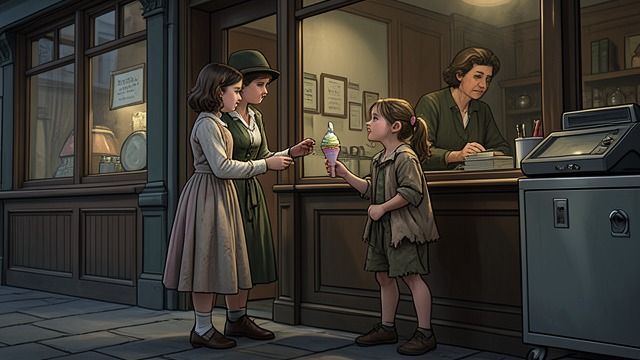
A Small Invitation
An offered treat
Maureen invites the girls into Isaley’s and buys ice cream for herself and Pecola. Claudia and Frieda, who have no money of their own, stay outside; Claudia privately recognizes how much she had hoped to be included in the treat.
The difference is slight in material terms but significant in the group’s emotional balance. Maureen’s generosity is directed toward Pecola, while the sisters watch from the sidewalk and try to conceal their disappointment.
Uneven closeness
As the girls walk together, Maureen talks confidently about boys, bodies, and growing up. Pecola listens and asks questions, seeking knowledge and companionship; the conversation’s ease gives no warning that the apparent friendship is about to turn hostile.
The Argument Turns
A Conversation Becomes a Weapon
The question of fathers
Maureen asks whether Pecola has seen a naked man. Pecola protests that a father would not be naked before his daughter unless something were wrong, and the exchange touches a painful subject the girls do not understand in the same way.
Claudia and Frieda have memories of seeing their own father naked, but Maureen turns the topic toward Pecola and invokes the boys’ gossip about her father. Pecola denies the claim, visibly shrinking into herself as the attention closes around her.
A racial insult
Claudia tells Maureen to stop speaking about Pecola’s father. Maureen answers by calling attention to the family’s Blackness, and Claudia swings at her, accidentally striking Pecola instead. The argument has shifted from awkward questions to a deliberate attack on Pecola’s dignity.
The Friendship Breaks
Superiority Declared
The final taunt
Across the street, Maureen calls herself cute and labels the other girls ugly and Black. Her words make explicit a hierarchy the children have absorbed from adults, school, and popular images: Maureen can claim beauty by contrasting herself with the girls she insults.
Claudia and Frieda answer with their private nickname for Maureen, but the retort cannot erase the sting. Pecola stands apart, watching Maureen leave, while the sisters recognize that the quarrel has exposed their own vulnerability to the same judgments.
What the rupture reveals
Maureen’s brief friendliness does not undo the social hierarchy that structures her treatment of Pecola and the sisters. The encounter teaches Claudia and Frieda that Maureen is not the source of the standard that wounds them; the standard itself is the deeper threat.
Winter, during Maureen’s first weeks at school
A false spring day, after school
The walk home immediately after the playground encounter
Later on the walk, near the Dreamland Theater
At the street corner, moments after the argument
